




Overview
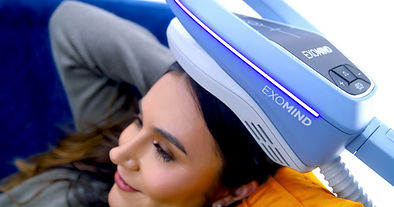
Transcranial magnetic stimulation (TMS) is a procedure that uses magnetic fields to stimulate nerve cells in the brain to improve symptoms of major depression. It's called a "noninvasive" procedure because it's done without using surgery or cutting the skin. Approved by the U.S. Food and Drug Administration (FDA), TMS usually is used only when other depression treatments haven't been effective.
The FDA also approved TMS for obsessive-compulsive disorder (OCD), migraines and to help people stop smoking when standard treatments haven't worked well. Research continues into other potential uses for TMS, including epilepsy.
When used for depression, OCD and to stop smoking, this treatment involves delivering repeated magnetic pulses, so it's called repetitive TMS or rTMS.
How it works
During an rTMS session for depression, an electromagnetic coil is placed against the scalp of your head. This coil delivers magnetic pulses that stimulate nerve cells in the region of your brain involved in mood control and depression. It's thought to activate regions of the brain that have decreased activity during depression.
You also may hear the term "deep transcranial magnetic stimulation" or "deep TMS." The difference between rTMS and deep TMS has to do with the type of coil used. The deep TMS coil stimulates deeper and wider areas of the brain, compared with rTMS. Deep TMS coils have been FDA-approved for OCD and to stop smoking.
Although the biology of why TMS works isn't completely understood, the stimulation appears to affect how the brain is working. It seems to ease depression symptoms and improve mood.
There are different ways to perform TMS. Methods may change as experts learn more about the most effective ways to perform treatments.
Reference List: Mayo Clinic. (2023, April 07). Transcranial Magnetic Stimulation. https://www.mayoclinic.org/tests-procedures/transcranial-magnetic-stimulation/about/pac-20384625.




Synaptic Growth and
Strengthened Neural Connections
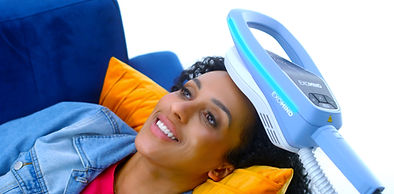
TMS pulses have the ability to selectively modulate neural activity by depolarizing neurons in a precise spatial and temporal manner. This results in changes to the excitability of the cortex, as well as the activation of distant cortical-subcortical and spinal structures via specific neural pathways.
Reference List: Cappon D, den Boer T, Jordan C, Yu W, Metzger E, Pascual-Leone A. Transcranial magnetic stimulation (TMS) for geriatric depression. Ageing Res Rev. 2022;74:101531. doi: 10.1016/j.arr.2021.101531 [DOI] [PMC free article] [PubMed] [Google Scholar]
Improved Brain Activity
Magnetic pulses activate underperforming neurons and encourage the formation of new synaptic connections.
Over multiple sessions, these strengthened pathways help restore healthier brain activity.
Reference List: Neurotherapeutix. (2026, April 16). TThe Science Behind Neuroplasticity: How TMS Helps Rewire the Brain for Recovery. https://neurotherapeutixnyc.com/the-science-behind-neuroplasticity-how-tms-helps-rewire-the-brain-for-recovery/


Mechanism-of-Action
Check out this two and a half minute video that easily explains how Transcranial Magnetic Stimulation (TMS) therapy works.
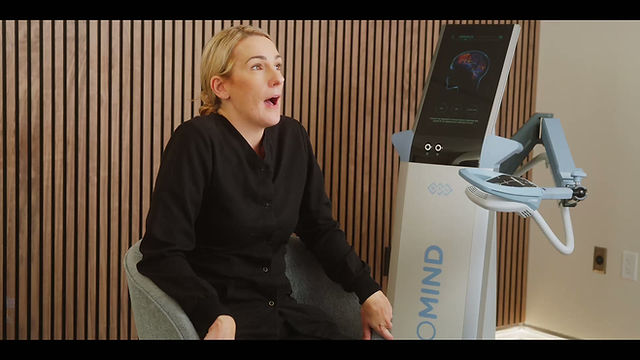
Hear from REAL Clients with REAL results!
Patient results and experience may vary. BTL devices should only be used under the continued supervision of a physician or licensed practitioner. Refer to the owner's manual for the full list of contraindications, side effects, and precautions. †EXOMIND is intended to be used for the treatment of Major Depressive Disorder (MDD) in adult patients who have failed to achieve satisfactory improvement from prior antidepressant medication in the current episode. BTL ®, EMSCULPT NEO®, NEO™, EMSCULPT®, EMSELLA®, EXILIS®, EMTONE®, HIFEM®, HIFES®, EMFEMME 360®, Core to floor®, EXION®, EMFACE®, ExoTMS™ and EXOMIND™ are trademarks and/or registered trademarks in the United States of America, the European Union, and other countries. The products, the methods of manufacture or their use may be protected by one or more U.S. or foreign patents or pending applications, see www.btlnet.com/patents. Trademarks EMSCULPT, EMSCULPT NEO, EMSELLA, EMTONE, EMFEMME 360, EMFACE and EMBODY are associated with the EM® family of products and services.